Strike authorization votes: rules, thresholds, and secrecy
A strike authorization vote asks members whether leadership may call a strike under the union's rules. The vote does not itself set a walkout date or establish a legal right to strike. Explain the exact authority, eligibility, threshold and ballot window before members vote, then report both the result and turnout.
What a strike authorization vote actually is
A strike authorization vote is the membership handing its bargaining committee a loaded negotiating position. A yes vote almost never starts a strike by itself; it authorizes leadership to call one if talks fail, under whatever conditions the constitution sets. That distinction is the first thing to communicate, because members who think they are voting to walk out tomorrow vote differently than members who understand they are voting to strengthen the committee's hand.
A strike authorization vote is also the vote where process failures cost the most. A ratification vote that goes wrong produces a grievance. An authorization vote that goes wrong produces a number the employer does not believe, which is worse than no vote at all.
A strike sanction vote is the same thing as a strike authorization vote: the membership vote that authorizes leadership to call a strike if bargaining fails. Which of the two names a local uses is set by its own constitution and custom, not by law, so the procedure in this guide applies either way. Watch for one ambiguity before you publish a notice: some parent unions also use the word sanction for their own approval of a strike, which is a separate step taken by the international rather than a vote of the membership. Check which meaning your bylaws carry, because the two follow different procedures.
Where the rules live
Strike authorization procedure comes from your own governing documents: the local's constitution and bylaws, and in most cases the parent union's constitution and strike fund rules layered on top. Public sector locals also operate under whatever their jurisdiction's labor law says about strikes, which varies widely. This guide is about running the vote well, not legal advice; before scheduling anything, read your governing documents end to end and put the question to your union's counsel or your international representative.
Three things to extract from that reading before you announce a date:
- Who calls the vote, and whether the international must sanction it first. Strike pay almost always depends on following the parent union's procedure exactly, so get the requirement and your compliance with it in writing.
- Who is eligible. Members in good standing is the usual formula, and dues arrears questions are far easier to settle before the ballot opens than after.
- What the ballot must look like. Most governing documents require a secret ballot for strike authorization, and even where they do not, running one any other way invites every problem in the next section.
Thresholds: the margin and the turnout both matter
Approval thresholds are set by your documents, and they vary: many internationals require a supermajority such as two thirds of those voting, others accept a simple majority, and some add quorum or minimum turnout requirements. Whatever your number is, treat it as the floor, not the goal.
The reason is that an authorization vote is read by two audiences. The membership reads the margin. The employer reads the margin multiplied by the turnout. Ninety five percent yes on twenty percent turnout tells the other side of the table that four in five members could not be moved to vote at all, and they will bargain accordingly. A credible mandate is a big margin on a big turnout, which is why the mechanics of reaching every member matter as much as the count itself.
Secrecy is the whole point
No union vote depends more on ballot secrecy than this one. Members weighing a strike are weighing their own paychecks, and they need to be able to vote no without being seen as breaking ranks, and yes without worrying about a supervisor ever finding out. A show of hands at a packed meeting fails both directions at once: it pressures the hesitant and it exposes the committed.
Ask any electronic ballot vendor who can connect a member to their choice, and get the answer in writing. If a tool's database records who picked what, it does not run a secret ballot, whatever the vendor promises, which is why that question comes first when you compare union voting apps. One Group Central encrypts each ballot before it is stored and records that a member voted as a keyed fingerprint, which is how it refuses a second ballot. Our servers can recompute that fingerprint for any member, so we can tell who has voted, and they receive each ballot with the member's identity attached before encrypting it. The protection runs toward your officers, who see only the totals, and not toward us as the operator. Our plain English guide to anonymous voting explains the machinery, and it is worth sharing with skeptical members before the ballot opens.
Officers and members see the same totals once an admin closes the vote, and those totals are the leak to plan for: if a small unit votes unanimously, its members' choices are known to anyone the totals reach.
Running the vote: an informed membership, then a fair window
Before the ballot opens, members need the picture: where negotiations stand, what the sticking points are, what a strike would mean in practice, and what the strike fund does and does not pay. Publish it in the same private portal that runs the vote, hold the questions period before voting starts, and answer in a channel every member can read. An authorization vote on a poorly informed membership produces a soft number regardless of which way it goes.
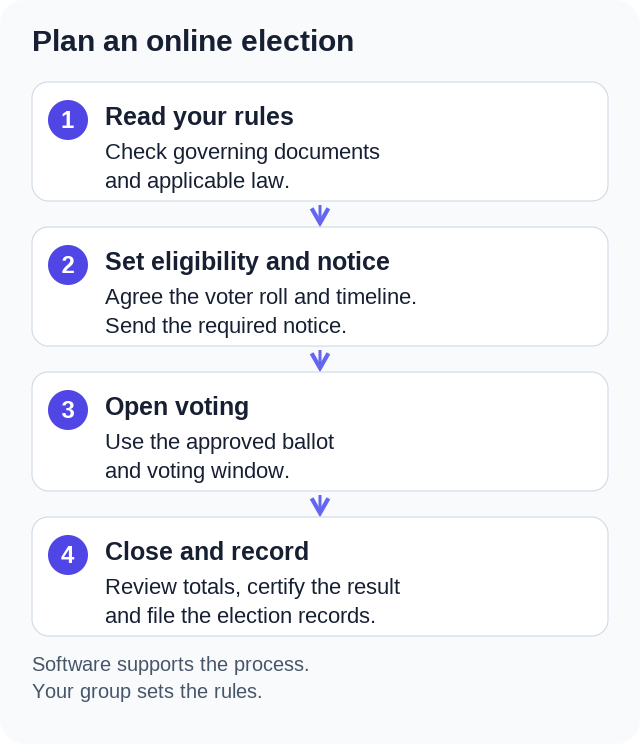
Then run the mechanics like a ratification vote. Settle the eligible voter roll before the ballot opens. One Group Central adds anyone who accepts an invitation while the vote is open, so if your rules fix the roll at the start, hold new invitations until it closes. Keep the window open at least 48 hours so every shift gets a real chance, send reminders at the halfway mark and near close, and never share a running result; the app shows no turnout until the vote is closed. Members without a smartphone vote from any web browser, and a supervised in person option during office hours covers everyone else.
Announcing a number both audiences believe
When an admin closes the election, the ballots are decrypted and tallied in one step, and the result shows the total number of ballots cast next to each option's count. The key that opened them is destroyed in the same step, so the count cannot be rerun later. A member who doubts the result can tap Verify my vote on the phone or computer they voted from, as long as they have not signed out since, and confirm the record still holds their ballot at the position on their receipt. That shows the ballot was kept. It does not recount anyone's vote. When the employer's labor counsel probes whether the mandate is real, the turnout and a documented procedure are what carry the weight.
Keep the whole packet together: the notice, the informational materials as posted, your eligible voter list (noting anyone who joined during the vote), the tally, and the audit trail. If the authorization is ever questioned, by a member, by the international, or across the bargaining table, that packet is the answer.
Records and observers
Every election gets a preservation hold when voting opens, and its records are kept for at least one year after it closes. An owner can extend that, and can give an election-specific observer read-only access to a complete redacted JSON review report. These tools support review but do not certify LMRDA compliance. Read the records and observers guide.
Run the next authorization vote in your own portal
One Group Central keeps the vote in the same private portal as your bargaining updates, the document library, and chat. Leadership gets the totals when the vote closes.
Start your free trial One-page brief for your board (PDF)